
Curly Leaf Pondweed
Curly leaf pondweed is a problem in the Cullens and has been for many years.
Yet there is good news: lake association leadership and members are committed to addressing it.
Thanks to the generous donations of members, the Cullen Lakes Association is able to pay for and coordinate annual treatments that limit the prevalence of this recreation-inhibiting plant.
Donations are important because they pay for the majority of treatment costs. The CLA seeks curly leaf pondweed treatment grants from the Minnesota DNR every year. However, grant funds have become less available and sometimes are non-existent. As a result, donations are more important than ever.
Treating curly leaf pondweed is by far the lake association’s largest annual expense.
Efforts to control curly-leaf pondweed in the Cullens occurred again this spring.
In May of 2026, all three lakes were treated based on a permit issued by the Minnesota Department of Natural Resources. The DNR informs the CLA on where, when and how treatments must occur.
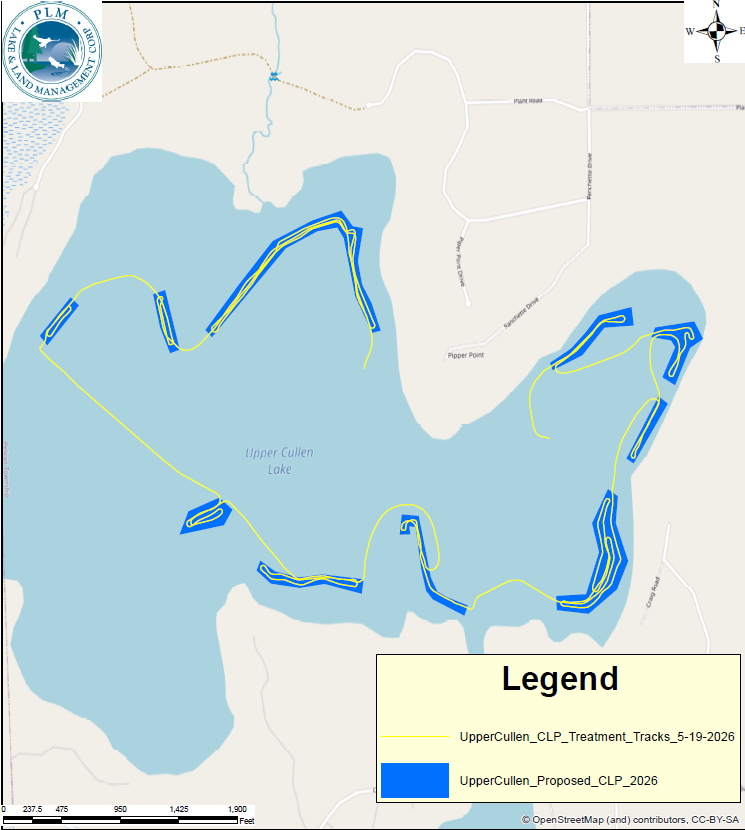
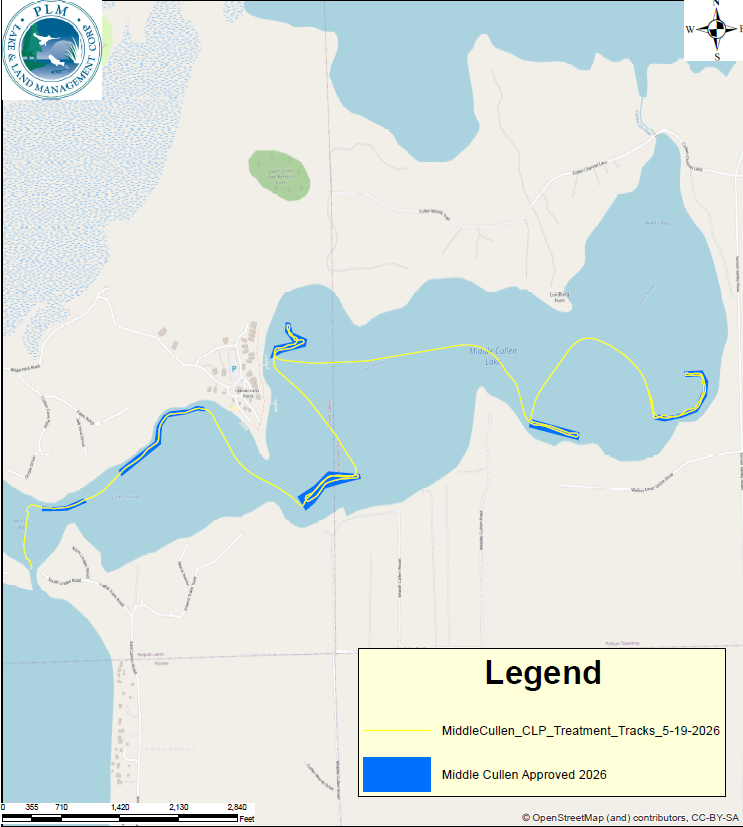
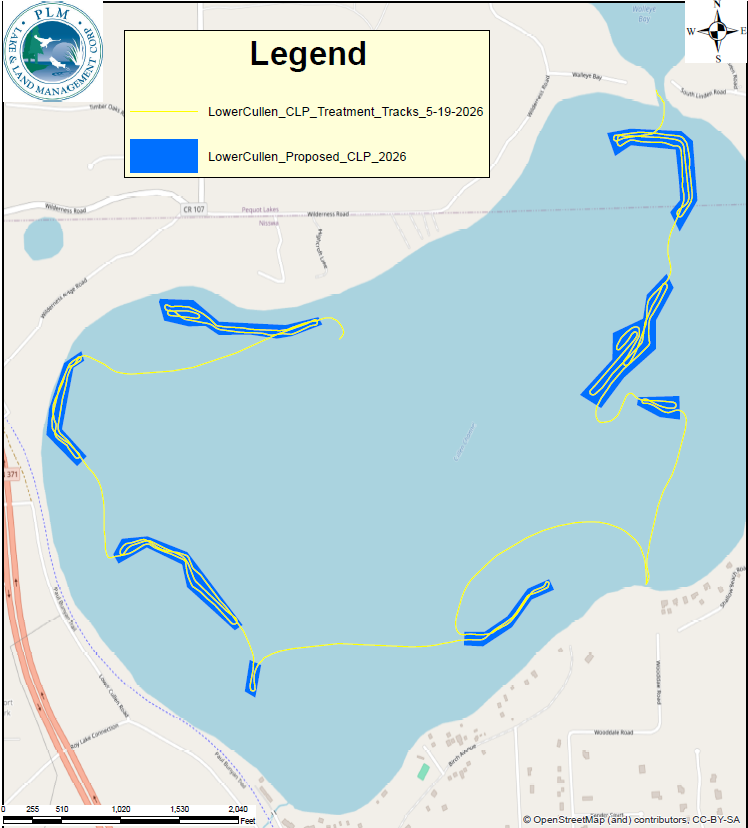
This year, a copper-based herbicide was applied to curly-leaf pondweed across 22 acres in Upper Cullen, 26 acres on Lower Cullen and 10 acres on Middle Cullen. The total cost was about $17,000. The CLA hired PLM Lake and Management Corp. of Brainerd to do the work.
Following treatment, PLM staff placed signs on land and buoys in the water where the treatments were done. The treatments don’t generate any swimming or fishing restrictions but do briefly impact lawn watering.
Maps on this page show the areas treated in 2026.
2025 Pondweed Location Maps
Curly Leaf Pondweed FAQs
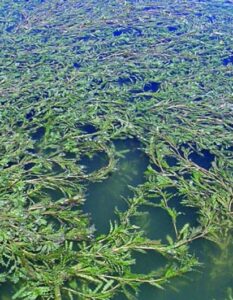
Curly-leaf pondweed is a rooted submersed aquatic plant. It varies in color from olive-green to reddish-brown. It can be identified by its wavy lasagna noodle-like leaves that are approximately a half-inch wide and two to three inches long. Leaves have an obvious mid-vein, “toothed” or serrated edges and blunt tips.

- It can overtake native aquatic plant habitat, outcompeting native plants.
- It can form dense mats at the water’s surface, interfering with water recreation activities.
- It provides unsuitable shelter, food, and nesting habitat for native fish and animals.
- It readily invades areas of disturbed lake bottom.
- Its mid-summer die-off contributes to late summer and fall algae blooms.
CLA has been treating areas of curly leaf pondweed treated since 2009. However, treatment was not allowed by the DNR in 2018 because of the lack of its growth and the abundance of active native plants within the proposed treatment areas at the time the treatment had to be done. Also, in 2019 proposed treatment areas in Middle Cullen were not allowed to be treated and areas treated in Upper and Lower Cullen were greatly reduced in acreage for the same reason.
The DNR only allows a certain percentage of a lake’s area to be treated each year. Also, chemical treatment of curly leaf pondweed is only effective in larger areas of the plants. In small areas the chemical used is not able to stay in contact with the plants long enough to be effective.
